

William Hope Hodgson's Out of the Storm, Explained: A Detailed Summary and a Literary Analysis

The following remarks on this story are quoted from Mr. Chris Walton’s 2008 article “Out of the Storm: The Apocalypse of William Hope Hodgson", from his superb horror blog, Ten Horned Beast. Mr. Waltons’ words eloquently and astutely analyze this text, and I will largely allow them to speak for themselves; his writing appears here – and later in the afterword analysis – by his permission:
‘For Hodgson the sea is never a benign environment, rather it is the lair of monsters and ancient terrors, phantom derelicts and the ghosts of the sea-dead rising to revenge themselves on the living. Mariners find themselves cast away on dripping, alien islands that have risen temporarily from the ocean floor or they are buffeted and blasted by spectral winds that converge from the four corners of the earth. The sea is a borderland of the soul, a liminal neither/neither place that partakes both of the sacred and the profane. A place where the boundaries that separate us from the beyond are blurred and merged, where it is possible to hear in the wash of the waves the beast rising from the deeps.
‘Of all Hodgson’s sea stories “Out Of The Storm”, first published in 1909, stands apart in it’s abject horror. The story begins conventionally enough with a tone of Edwardian domesticity as a caller pays a visit to a scientific friend to find him receiving a message from a sinking ship via a strange telegraph-like machine. But as the narrative unfolds we are subjected to an intense and hallucinary description of a man at the point of death, mortally afraid and in the grip of dire spiritual revelation.
‘The son of an Anglican vicar Hodgson must have been well aware of the Christian symbolism associated with the sea. The figure of the steadfast mariner who clings to his faith and is rescued from the swell, Jonah’s time in the belly of the whale and the deluge that cleansed the world of the sinful were all fitting subject for pious hymns, sermons and pamphlets but in “Out Of The Storm” the narrator sets these traditional Christian motifs of salvation and redemption, so familiar to Hodgson’s readers, at naught. Instead God is mocked and abjured and in his extremity the narrator deifies and glorifies the raging storm.’
SUMMARY

The story is framed as a transcript of a wireless message received by a scientist from his friend aboard a doomed ship. As the vessel founders in a monstrous storm, the operator sends a final account of his experiences while awaiting an inevitable death.
The frame-narrative narrator enters the laboratory to find the scientist anxiously recording the transmission, which begins with the desperate announcement: “John, we are sinking!” The narrator attempts to hail the scientist, who gruffly waves him off until the transmission stops. Stunned and rattled, he slumps down and hands the transcript to the narrator, mournfully commanding him, "Read!"
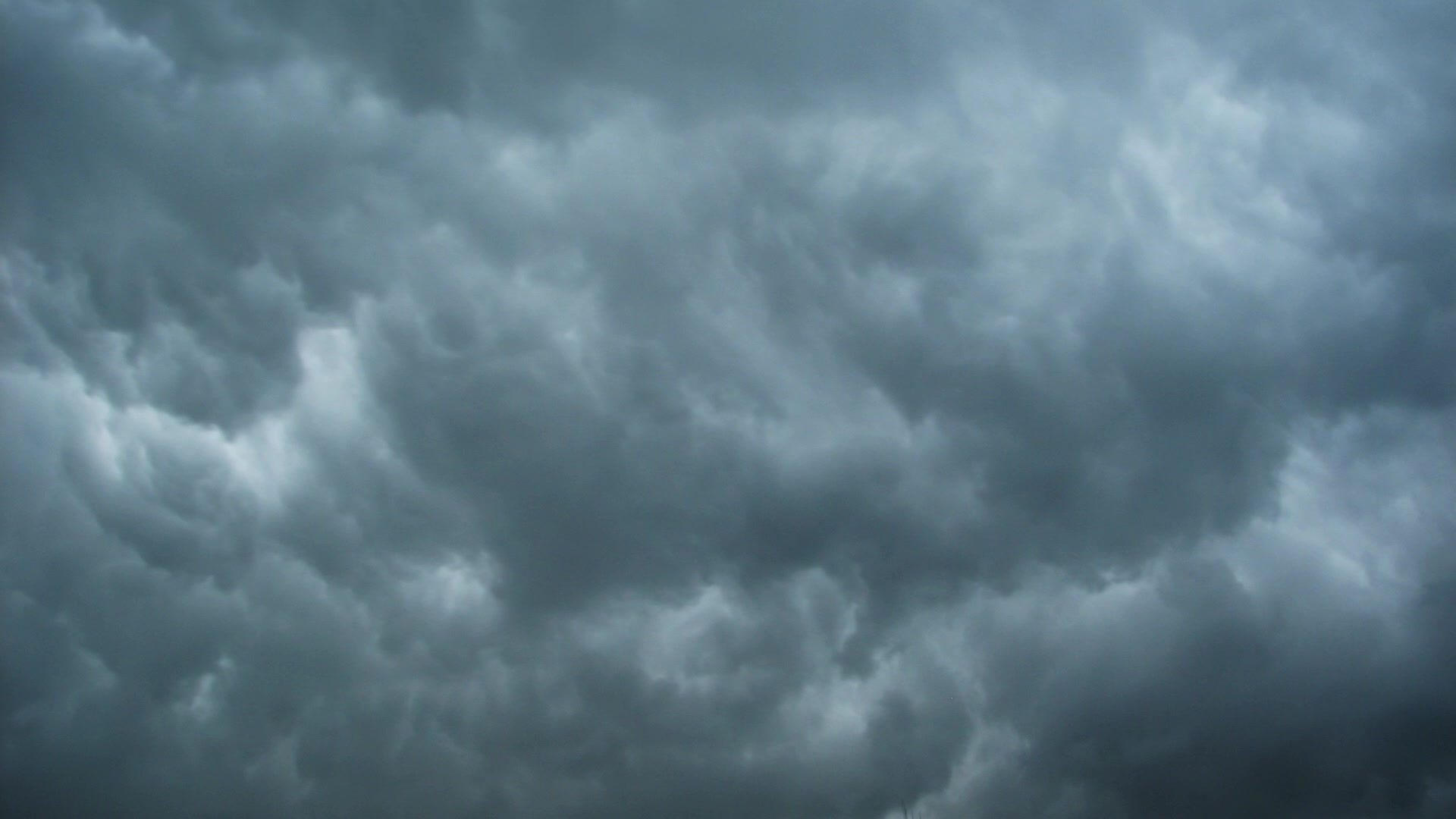
The doomed man (who takes over as the narrative hence forward) describes a terrifying seascape unlike anything known to ordinary sailors. The sky hangs overhead like “gray mud,” from which descend vast cloud masses whose torn edges resemble “the tentacles of some enormous Horror.” Convinced that he stands on the threshold between life and death, he claims to have learned dreadful truths hidden from the living. The sea is no longer merely water but a conscious, malevolent entity. He speaks of it as “the Thing,” a monstrous power that revels in human suffering.
As the ship breaks apart, the sea appears to infect the survivors with madness and selfishness. The operator witnesses scenes of horror among the passengers. The officers are all dead (the last one was washed away an hour prior), and chaos now reigns.
Most shocking is a mother who, fearing she cannot hold both herself and her child against the storm, bites at her son’s hands as he clings to her. When he is finally washed away, she looks up at the narrator, who is stunned to see her lips darkened with his blood.
Elsewhere, a young woman violently attacks her sweetheart to seize a sheltered position. She succeeds in bludgeoning him and bares her teeth in an insane grin. These acts convince the narrator that the sea is corrupting human souls.
His terror deepens into blasphemous despair. Rejecting God, he declares, “The sea is now all the God there is!” and imagines the waves as a living beast with teeth that devour sailors. Yet after being injured and losing consciousness, his frenzy subsides.
Awakening calmer, he repents: “I believe I blasphemed. May He forgive me!” He once again places his trust in divine mercy.
As the end approaches, he grows weak and confused. The final message breaks off when the sea bursts into the ship: “My God! I am dr-own-ing! I—am—dr—” The transmission ends, leaving only silence and the certainty of his death.
ANALYSIS

Hodgson's tale can be understood as a dramatization of what happens when a person confronts the sublime in its most terrifying form. Nineteenth-century writers often distinguished between ordinary fear and the sublime: an encounter with something so vast, powerful, and incomprehensible that it overwhelms the human mind.
The sea has long served as a symbol of this experience, from Romantic poetry through maritime fiction. In this story, however, Hodgson pushes the concept toward cosmic horror. The operator begins by describing a storm, but gradually ceases to perceive the sea as a natural phenomenon at all. Instead, it becomes "the Thing," a living intelligence whose scale dwarfs humanity. The clouds become tentacles, the waves become teeth, and the ocean becomes a godlike being.
Importantly, we are never told whether these perceptions are objectively true or merely the hallucinations of a terrified man. The ambiguity is essential. Hodgson's real subject is the human tendency to mythologize overwhelming natural forces, transforming them into monsters when reason can no longer cope with terror.
II.
“Out of the Storm” is also deeply concerned with the collapse and restoration of faith. The operator's spiritual journey follows a pattern found in many religious narratives of temptation. As he witnesses suffering and apparent injustice, he arrives at a version of the classic problem of evil: how can a benevolent God permit such horrors?
His answer is not atheism but something stranger. He concludes that God exists but has been displaced by a more immediate and powerful deity: the sea itself. "The sea is now all the God there is." This is a remarkably pagan moment. The ocean becomes a primitive god demanding sacrifice, while Christianity appears distant and powerless.
Yet Hodgson ultimately rejects this conclusion. After injury and exhaustion interrupt his frenzy, the operator repents and returns to orthodox belief. The story thus stages a temporary rebellion against God brought on by terror and despair. Rather than presenting cosmic horror as a final truth, Hodgson portrays it as a spiritual temptation experienced in extremis.
The most disturbing scenes—the mother biting her child's hands, the lovers fighting for shelter—should probably be read symbolically as well as literally. Throughout the story, the sea strips away the social and moral structures that ordinarily govern human behavior.
Civilization, romance, parental affection, and religious certainty are all subjected to the same test. Under the pressure of imminent death, people are reduced to their most elemental instincts. The sea therefore functions not merely as an external threat but as a force of revelation. It exposes what lies beneath the veneer of civilization.
This idea would later become central to much twentieth-century horror, particularly the work of H. P. Lovecraft, who admired Hodgson. Yet Hodgson differs from Lovecraft in one crucial respect: the revelation is not final. The protagonist's return to faith suggests that there remains something in humanity capable of resisting the abyss.
III.
The story also gains depth when placed within Hodgson's biography. Before becoming a writer, William Hope Hodgson spent years at sea in the merchant marine and experienced storms firsthand. Unlike many Gothic writers, he was not imagining the ocean from a comfortable study.
Consequently, the story's supernatural imagery grows out of authentic maritime experience. Sailors have long spoken of the sea in almost personal terms—as cruel, hungry, jealous, or merciful. Hodgson literalizes this tradition. The sea becomes a character, perhaps even the central character, and the sinking ship becomes a stage on which humanity confronts forces older, larger, and more indifferent than itself.
The result is a story that stands at an interesting crossroads between the Christian moral tale, the maritime disaster narrative, and the emerging literature of cosmic horror. It is less concerned with whether monsters exist than with what the human mind becomes when faced with something so vast that it feels monstrous.
Before we part ways with this unsettling story,
let us return to Walton’s analysis from
Ten-Horned Beast and allow him
to close us out:
‘The sea itself is personified and horrified – it is foul and full of “Satanic thunder”, it mocks and cackles like “Hell from the mouth of an ass”. The storm lashed ocean is omnipotent and malevolent, thoughtless and careless, the destroyer and consumer of all.
When a sailor is swept over the side the narrator sees huge monstrous jaws in the waves, hears the clash of titan teeth. We are not sure if this is metaphor or reality, has the sea come alive, is it animated and sentient, a vast thrashing many-jawed leviathan that can not be subdued?
‘Hodgson hated and feared the sea. It is to him the ur-source of all that is wicked and blasphemous upon the face of the earth. With a message that echoes the biblical destruction of Sodom & Gomorrah the sea in “Out Of The Storm” teaches sin and fosters the procreation of the wicked. It is possessed of a creeping, insidious, infectious foulness that causes mothers to abandon their children and lovers to slash at each other with tooth and claw. As the waters rise above their heads the narrator can hear the sea calling, whispering of death and the grave until he is repulsed and sickened, “to speak of it to one of the living is to initiate innocence into one of the infernal mysteries--to talk of foul things to a child”.
‘We are reminded of the end times, a ship of fools, brother turning against brother, the hells and wastelands of Bruegel and Bosch in which tortured, terrified people are stripped bare of their humanity and their souls laid open and ugly to await final judgement. But near the very end, with the sea-green grave gaping beneath him the narrator recants his blasphemy and clings once again to the religion of his childhood. He asks God to aid him in his mercy, begs for forgiveness, prays for death. Is this conversion genuine? Is the narrator turning to God with love – or fear in his heart? He begs the listener not to repeat his ravings because he is himself afraid of what has been revealed. Woe to you o earth and sea. There are things that are worse than death.’